Step‑By‑Step Plan To Sell Your Move‑Up Home In McKinney
June 11, 2026
June 11, 2026
Selling your move-up home in McKinney can feel like a balancing act. You want top dollar, a smooth timeline, and a clear path to your next home, but today’s market rewards preparation more than guesswork. If you plan carefully, you can make smart decisions before your home goes live, avoid common timing mistakes, and move forward with more confidence. Let’s dive in.
McKinney is a strong fit for move-up sellers because much of the resale market centers on detached single-family homes. The City of McKinney’s 2026 housing needs assessment found that 94% of homes sold from September 2024 through September 2025 were detached single-family homes. That same report noted a median detached sale price of $550,000, with 76% of sales landing between $300,000 and $700,000.
That said, this is not a market where you can simply name a price and expect buyers to rush in. Recent market trackers show a more balanced environment, with sale-to-list ratios around 98% and marketing times that can stretch beyond a few weeks. For you, that means realistic pricing and a polished launch matter.
If you are also buying your next home, mortgage rates add another layer to the plan. Freddie Mac reported a 6.48% average rate for a 30-year fixed mortgage on June 4, 2026. Even if your current home has built strong equity, your next monthly payment may still feel sensitive to rate changes.
Before you schedule photos or touch up paint, get clear on your bigger picture. A move-up sale is not just about listing your current home. It is also about protecting your timing, cash flow, and next purchase.
Start by writing down the numbers and terms that matter most to you. This keeps your decisions grounded when offers start coming in.
The Consumer Financial Protection Bureau says buyers should set aside funds for closing costs, moving expenses, repairs, home improvements, new furniture, and an emergency cushion of three to six months of expenses. It also notes that buyer closing costs typically run about 2% to 5% of the purchase price, separate from the down payment.
That kind of planning matters even more when you are selling and buying at the same time. The more clearly you define your target, the easier it is to weigh offers against your real life needs.
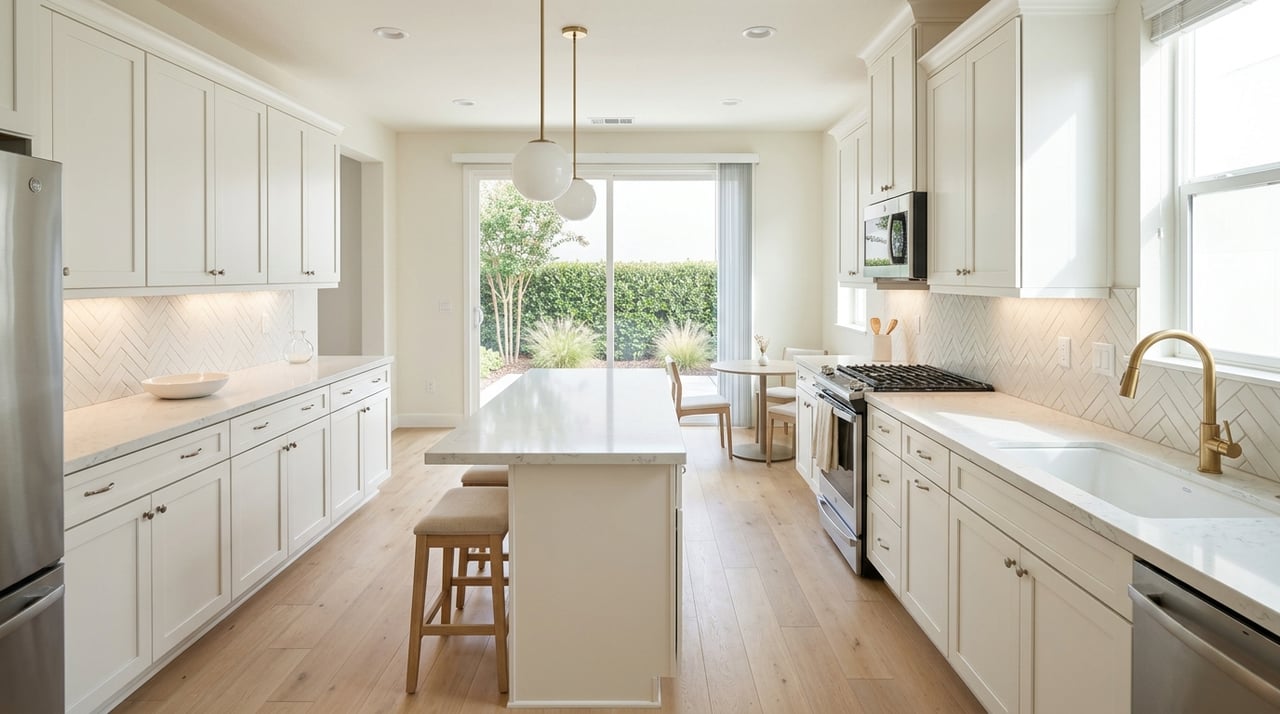
In McKinney’s move-up market, presentation is part of pricing. Buyers in this range often compare several similar homes, so your home needs to feel clean, current, and easy to understand from the first photo onward.
The National Association of Realtors’ 2025 Profile of Home Staging found that 83% of buyers’ agents said staging made it easier for buyers to visualize a property as a future home. The same report found that photos, physical staging, videos, and virtual tours all play an important role in listing performance.
According to NAR, the rooms buyers’ agents most often identified as important to stage were the living room, primary bedroom, and kitchen. That makes those spaces a smart place to focus if you want the biggest visual impact.
Staging should be treated as a performance tool, not a guarantee of a higher offer. NAR found that 41% of buyers’ agents said staging had no impact on the dollar value offered, while others reported varying levels of improvement. In other words, staging can help buyers connect with the home, but it still works best when paired with strong pricing and a smart launch strategy.
For budget context, NAR reported a median spend of $1,500 when sellers used a staging service. The median was $500 when the seller’s agent personally staged the home.
Texas sellers should prepare for disclosures before the home hits the market. Texas Property Code Section 5.008 requires most sellers of residential property with not more than one dwelling unit to provide a seller’s disclosure notice.
The Texas Real Estate Research Center explains that this notice covers the seller’s knowledge of the home’s condition, damage, needed repairs, items that do not work, and other material facts. It is not a warranty, and it does not replace inspections. It is simply your disclosure of what you know.
This is one of the easiest ways to create a smoother transaction from the start. A calm, organized listing process usually begins well before buyers ever walk through the door.
One of the biggest mistakes move-up sellers make is pricing from memory. You may remember what a neighbor got at a peak moment, but buyers are shopping in the market that exists now.
Recent data points all support the same strategy in McKinney: price realistically and expect negotiation. Redfin reported homes selling about 2% below list on average, while Realtor.com reported homes sold 1.52% below asking on average in March 2026. Zillow’s Collin County data also points to a sale-to-list ratio near 0.981.
Broad county averages can be helpful for context, but your pricing decision should be neighborhood-specific. In a market where buyers have options, an overreaching list price can make a home feel stale, even if the home itself is beautiful.
Your sale price is only one part of the equation. What matters most for your next move is what you actually keep after costs.
Under the standard Texas Real Estate Commission contract framework, sellers commonly pay for releases of existing liens, deed preparation, tax statements or certificates, one-half of the escrow fee, and any brokerage fees they agreed to pay. Those costs should be part of your planning before you start shopping for the next home.
If you have substantial equity, tax planning may also matter. IRS guidance says some homeowners may exclude gain on the sale of a main home if they meet the ownership and use tests, generally meaning they owned and used the home as their main residence for at least two of the five years before the sale. The common exclusion limits are up to $250,000 for some individuals and up to $500,000 for some married couples filing jointly.
If you think your gain may be significant, it is wise to raise that question early so it does not become a surprise near closing.
For many move-up sellers, timing is the hardest part. You want enough leverage to sell well, but you also need a workable path into your next home.
In many cases, selling first gives you a clearer financial picture. You will know your actual net proceeds, your true monthly budget, and how strong your next offer can be.
Texas has a specific form for this situation. The Texas Real Estate Commission’s Seller’s Temporary Residential Lease can be used when the seller stays in the property for no more than 90 days after closing.
This can give you breathing room if you need a short gap between your sale and your move. It is not right for every deal, but it can be a useful option when timing is tight.
Texas also includes an Addendum for Sale of Other Property by Buyer. This may be relevant if your next home purchase depends on the sale of your current property.
The exact fit depends on your transaction, but the key idea is simple: Texas provides tools that can help structure a more manageable transition when both sides of the move need to line up.
Once the prep, pricing, and paperwork are in place, your launch window matters. In a market where homes are not always moving instantly, first impressions carry real weight.
A strong launch means your home is fully ready on day one. That includes clean presentation, complete disclosures, professional visuals, and a price that reflects current market conditions.
This is where a concierge-style approach can make a real difference. Premium presentation, clear communication, and a thoughtful listing strategy help reduce friction and keep the process moving.
The highest offer is not always the best offer. For move-up sellers, terms can be just as important as price.
As you review offers, look at the complete picture. A slightly lower offer with a better closing timeline, fewer repair demands, or post-closing occupancy flexibility may serve your next move better than a higher number with more risk attached.
When your sale and next home are connected, good negotiation is about protecting both transactions at once. That is why your transition plan from Step 1 becomes so valuable later.
Selling a move-up home in McKinney is not just a listing event. It is a coordinated plan that touches pricing, presentation, disclosures, timing, and your next financial step.
When you prepare early, price with the current market in mind, and build a strategy around your real goals, you put yourself in a much stronger position. If you want calm guidance, premium presentation, and a personalized plan for your next move in McKinney or across Collin County, Asha Rani can help you move forward with clarity.

Lead Real Estate Agent
Asha Rani, a Coldwell Banker real estate agent with over eight years of experience, is committed to providing a seamless buying and selling experience. With a background in retail, customer service, and IT, she stays ahead of market trends to guide clients with expertise. Her dedication has earned her top industry awards, including the Luxury Agent Award (2022) and International Diamond Society Award (2023). Fluent in English and Hindi, Asha prioritizes strong client relationships and ensures every transaction is smooth and stress-free.
Stay up to date on the latest real estate trends.





You can trust that Asha will be there to listen to your dreams and desires, to be a calming force through the process of buying or selling, and to ensure the journey from contract to close is as smooth and pleasurable an experience as possible.