Leave a Message

Thank you for your message. We will be in touch with you shortly.

Townhome Vs Single-Family Living In Plano

March 12, 2026

Trying to choose between a townhome and a single-family home in Plano? You are not alone. Buyers here balance commute, space, and monthly costs while trying to keep maintenance simple. In this guide, you will see clear, Plano-specific differences in space, costs, HOAs, financing, and lifestyle so you can match your choice to how you live. Let’s dive in.

Plano market at a glance (2026)

Citywide medians in early 2026 sit in the mid $400,000s to low $500,000s, though prices vary widely by neighborhood and property type. Townhomes near Legacy West and Downtown Plano can cluster at higher price points when amenities and location are premium. Established single-family neighborhoods across East, Central, and West Plano offer a wide lot-size range and ages, which drives variation in value and ongoing upkeep.

Texas does not have a state income tax, so property taxes are a key monthly and annual cost. Your total bill depends on several entities, including the City of Plano and Collin County. Review current tax presentations and verify parcel-specific rates before you budget long term using Collin County tax resources.

If a private yard is not your top priority, Plano’s park system can help you live large outdoors with minimal yard work. The city maintains more than 4,300 acres of parks, including Oak Point Park & Nature Preserve and Arbor Hills Nature Preserve, which offer trails and open space for daily use. See highlights in the Visit Plano fact sheet.

Townhome vs single-family: key differences

Maintenance and ongoing costs

  • Townhomes: HOAs commonly handle exterior care, roofing and common areas, plus amenities like pools. You handle interiors and in-unit systems. Expect HOA dues and occasional special assessments. In Plano, many townhome HOAs fall roughly in the 150 to 400 dollars per month range, depending on amenities and what utilities or insurance are included.
  • Single-family: You control the yard, exterior, fence, driveway and any pool. You will likely spend more time coordinating service providers but may avoid higher monthly HOA dues in many neighborhoods.

Space, layout and lot size

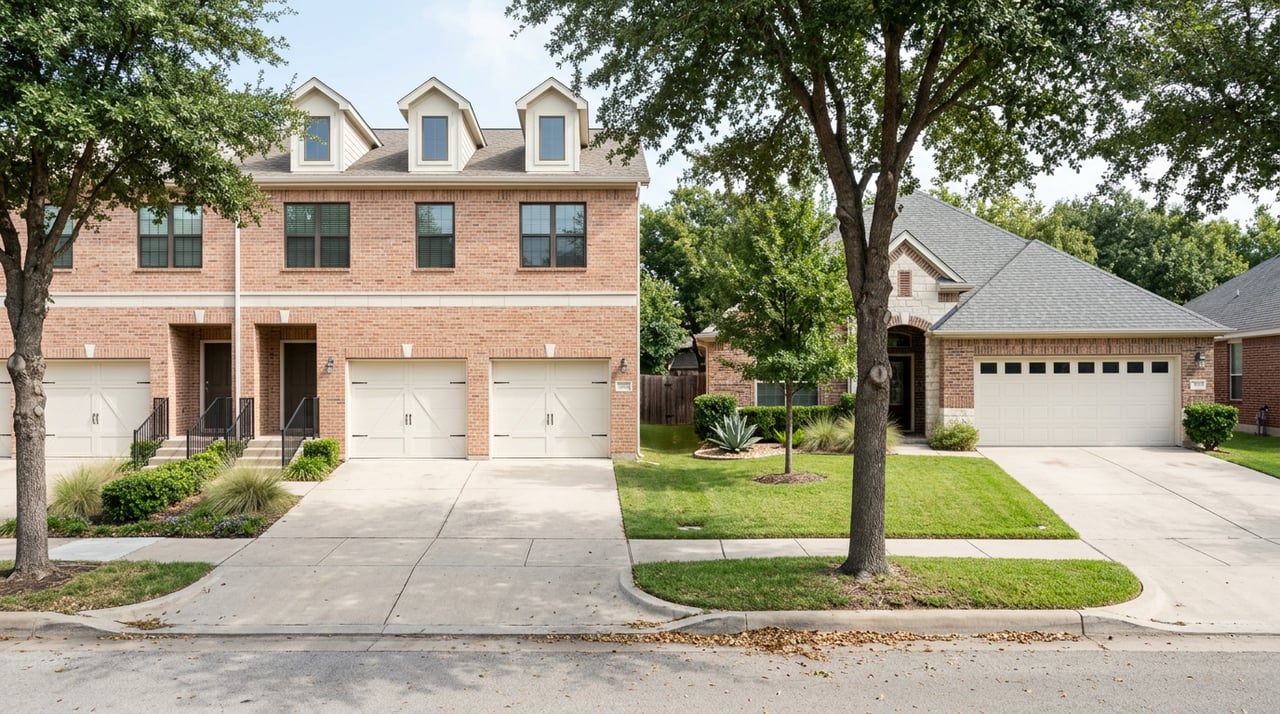
  • Townhomes: Lots are compact or zero-lot-line, trading a large yard for multi-level living and attached garages. Always confirm whether the home is fee-simple or part of a condo regime, since that changes maintenance and insurance rules.
  • Single-family: Lots in many Plano neighborhoods commonly range from about 0.15 to 0.33 acres, with some larger parcels in certain pockets. You will usually get more private outdoor space for projects, pets and gatherings.

Parking and guest access

  • Townhomes: Most have 1 to 2 car attached garages. Curb parking can be limited in denser clusters, and guest spaces may be governed by HOA rules. Check guest parking, overnight policies and EV charging rules before you buy.
  • Single-family: Driveways and attached 2 to 3 car garages are common, plus on-street parking where allowed. This can make life easier for multi-driver households or frequent visitors.

Outdoor areas and privacy

  • Townhomes: Patios, balconies and small yards are common, and shared green spaces often replace larger private lawns. If you value easy access to restaurants, shopping and trails, townhomes near Legacy West or Downtown Plano can be a strong fit. Explore area amenities in the Visit Plano fact sheet.
  • Single-family: Larger backyards can support a garden, play area or future pool. You will have more control over exterior changes, subject to permits and any HOA rules.

Noise and shared walls

  • Townhomes share one or two walls, so construction quality and whether the unit is an end unit matter. Ask about party-wall construction, insulation and any recent soundproofing upgrades.
  • Single-family homes usually offer more separation from neighbors, which can mean quieter interiors.

HOAs and Texas rules

HOAs are common in attached communities and increasingly present in newer developments. In Texas, HOAs file management certificates that list key contacts and governing documents. You can search for a property’s association details using the state’s HOA management certificate search. This is a helpful starting point before you request the full resale package during your option period.

Financing and insurance basics

  • Financing: Whether a townhome is fee-simple or in a condo regime affects loan options. Fee-simple townhomes are often underwritten like single-family homes. Condo-regime units may require project-level approvals for certain loan programs. Have your lender confirm program eligibility early, and review what project documents they will need. For an overview of how attached homes are handled, see this financing guide for attached homes.
  • Insurance: Townhome coverage varies by HOA master policy. Some communities insure the exterior shell, while you carry an HO-6 policy for interiors and contents. Single-family owners typically carry an HO-3 policy on the entire structure. Confirm whether the HOA’s master coverage is walls-in or walls-out to avoid gaps.

Where each option shines in Plano

First-time buyers

You may appreciate the lower maintenance and predictable monthly costs of a townhome, especially near mixed-use areas with dining and retail. In some neighborhoods, smaller detached single-family homes can be competitive on total monthly cost if HOA dues are minimal. Consider dues, parking policies and your preferred commute.

Downsizers and empty nesters

If you want a lock-and-leave lifestyle, a townhome with HOA exterior care can simplify life. If you prefer single-level living and a bit more private space, a smaller single-family home in an established neighborhood could be the right fit. Plano’s network of parks and trails can also replace the need for a large personal yard. Review options in the Visit Plano fact sheet.

Relocating professionals

Your choice often pivots on commute and neighborhood feel. Townhomes near major corporate campuses and DART corridors offer convenience and low upkeep. Single-family homes west of Preston or in established pockets across Plano may trade walkability for more space and a private yard. Compare drives at typical travel times before you decide.

Neighborhood patterns and price bands

  • West Plano and Legacy West corridor: Expect a mix of luxury and mid-range townhomes alongside high-end single-family homes. Prices are higher on average, with some townhomes matching or exceeding nearby single-family options when location and newness are premium.
  • Downtown Plano and historic pockets: You will see more infill townhomes and small-lot single-family homes with strong access to restaurants and rail. Prices between product types can sit close together here.
  • East and Central Plano: Established single-family neighborhoods with larger lots in some areas and older construction. This can be a good place to find a bigger yard and a wider range of home ages.

Always confirm current pricing and trends using recent neighborhood comps that match the exact product type and age.

Cost comparison checklist

Use this quick template to compare two addresses side by side:

  • Mortgage: Principal and interest at your current rate quote.
  • Property taxes: Use the most recent tax bill and estimate changes based on assessed value. Review local tax context via Collin County resources.
  • HOA dues: Note what the fee covers. Many Plano townhomes run roughly 150 to 400 dollars per month, but amenity levels vary.
  • Insurance: HO-6 for many townhomes, HO-3 for most single-family homes. Confirm the HOA master policy scope.
  • Maintenance reserve: Budget for roof, exterior and amenity special assessments in a townhome, and for yard, pool, fence, and exterior systems in a single-family home.
  • Utilities: Check what the HOA covers, like landscaping or water in some communities, vs all utilities in single-family homes.

Due diligence for Plano buyers

Gather these items early so your comparisons are accurate and your financing stays on track:

  1. HOA management certificate. Start with the state’s management certificate search to identify the association and manager.

  2. Resale package and TREC Form 37-5. Request the resale certificate, current budget, reserve study and balance sheet. Expect a processing fee and variable turnaround. See the form overview here: TREC Form 37-5 summary.

  3. Governing documents. Review CC&Rs, bylaws, rules and architectural guidelines. These spell out parking, rental limits, pet rules and exterior modifications. Texas guidance is outlined on hoa.texas.gov.

  4. HOA minutes and assessments. Ask for the last 12 months of board minutes and any planned special assessments or major capital projects.

  5. Insurance clarity. Get the association’s master policy declaration page. Confirm walls-in vs walls-out coverage and discuss appropriate HO-6 limits with your insurer.

  6. Ownership type and loan fit. Verify whether the property is fee-simple or condo-regime. If using VA or FHA, check condo approval status or lender program rules early. For VA condo guidance, see this VA-approved condo overview. For general attached-home financing distinctions, review this attached-home financing guide.

  7. Parking specifics. Confirm deeded or assigned spaces, guest parking rules, towing policies and EV charging.

  8. True apples-to-apples comps. Compare to like properties only, matching age, end-unit vs interior, garage setup and lot size.

How to decide in 10 minutes

  • If you want low weekly upkeep, predictable exterior care and walkable access to dining, a townhome likely fits.
  • If you value a private yard, more control and room to grow, a single-family home likely fits.
  • If you split the difference, look for fee-simple townhomes with minimal dues or smaller single-story homes in established neighborhoods.
  • Run the full monthly comparison, including taxes, HOA dues and insurance type, before you fall in love with a floor plan.

Ready to compare homes?

If you want a calm, data-informed plan tailored to your budget, commute and must-haves, let’s talk. I will help you stack Plano townhome and single-family options side by side, line up HOA documents and financing needs, and tour the neighborhoods that fit your lifestyle best. Connect with Asha Rani to get started.

FAQs

Are townhomes cheaper than single-family homes in Plano?

  • Sometimes. Townhomes often list lower than larger single-family homes, but in premium areas like Legacy West, new townhomes can match or exceed nearby single-family prices. Compare recent neighborhood comps for a specific answer.

How much are typical Plano townhome HOA dues?

  • Many communities fall roughly in the 150 to 400 dollars per month range, depending on amenities and what is included, like landscaping, water or insurance. Always check the current budget and inclusions.

Will my lender treat a townhome like a house?

  • If the townhome is fee-simple, many lenders treat it like a single-family home. Condo-regime townhomes may require project approval for FHA, VA or certain conventional loans, so have your lender confirm early.

What is the biggest lifestyle trade-off between the two?

  • Time vs control. Townhomes reduce exterior chores but add HOA rules and fees. Single-family homes give you more control and space, with more maintenance to manage.

How can I enjoy outdoor space without a big yard in Plano?

  • Use the city’s large network of parks, preserves and trails, including Oak Point and Arbor Hills. See the Visit Plano fact sheet for an overview of local options.
Asha Rani

About the Author

Lead Real Estate Agent

Asha Rani, a Coldwell Banker real estate agent with over eight years of experience, is committed to providing a seamless buying and selling experience. With a background in retail, customer service, and IT, she stays ahead of market trends to guide clients with expertise. Her dedication has earned her top industry awards, including the Luxury Agent Award (2022) and International Diamond Society Award (2023). Fluent in English and Hindi, Asha prioritizes strong client relationships and ensures every transaction is smooth and stress-free.

Work With Asha

You can trust that Asha will be there to listen to your dreams and desires, to be a calming force through the process of buying or selling, and to ensure the journey from contract to close is as smooth and pleasurable an experience as possible.